Red Bull Marketing Strategy: How Kastner & Partners Got In by Knowing the Prospect
The usual Red Bull case study starts in the stratosphere. A man steps off a platform, the internet holds its breath, and a drinks company looks like a broadcaster. It is a good story. It is not the lesson agency owners need.
The more useful story starts on the ground, years earlier: Red Bull already knew its prospects. It knew who needed energy, where those people already gathered, and what told the brand it was time to show up with a cold can. The advertising work, from Kastner & Partners, gave that knowledge a language the world still recognizes.
This teardown is written for agency owners. The agency is the hero. The subject is how a brand practiced "know your prospect," and what that still teaches a firm that sells to brands rather than to students in a library.
There is no DTC POD episode to embed here. The show's public catalog has no Red Bull, Kastner & Partners, or Red Bull Media House interview.
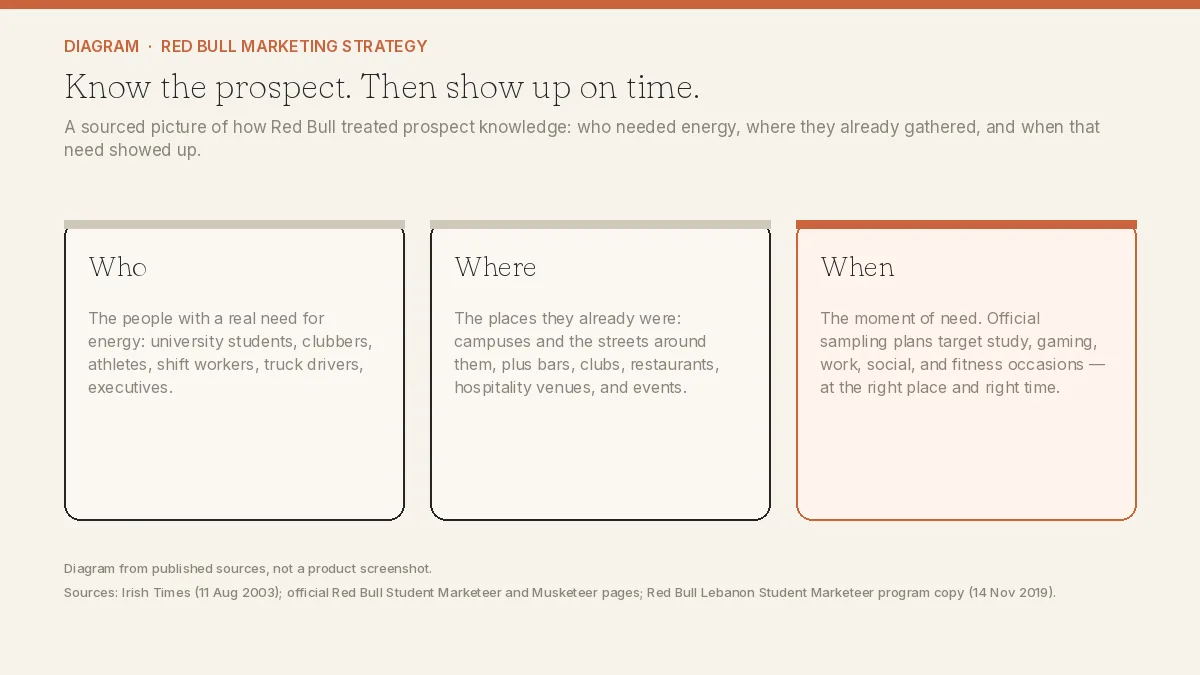
The prospect was never "everyone who is tired"
Dietrich Mateschitz founded Red Bull. The first can was sold in Austria on 1 April 1987. That was not only a new product. It was, in the words of the Kunstmeile Krems exhibition that later celebrated the work, "the creation of a previously unknown product category" (Kunstmeile Krems, "Gives You Wings").
A new category has no obvious buyer yet. The useful move is to name the prospect more tightly than "people who get tired." Red Bull's own Student Marketeer program still dates that focus to the beginning: "Since 1987, Red Bull has been giving wiiings to university students. Today, more than 4,000 Student Marketeers worldwide spread awareness and excitement for the brand" (official Student Marketeer page).
University students were not the only prospect. In 2003, Nirmalya Kumar and Sophie Linguri, writing in The Irish Times, described the early ground game. Bars at first refused to stock the drink, "seeing it as a medicinal or health-related product rather than a mixer." Snowboarders and clubbers "recognised the boost it gave them and began taking it to alcohol-free discos." Only then did bars begin to stock it, and, mixed with vodka, it became a fixture in Austrian ski resorts and among "party animals" in other European hot spots. The same article says "consumer education teams also help generate buzz," and lists the people those teams were told to find: "those in need of energy": shift workers, truck drivers, university students, executives, clubbers and athletes.
The agency that gave those prospects a language
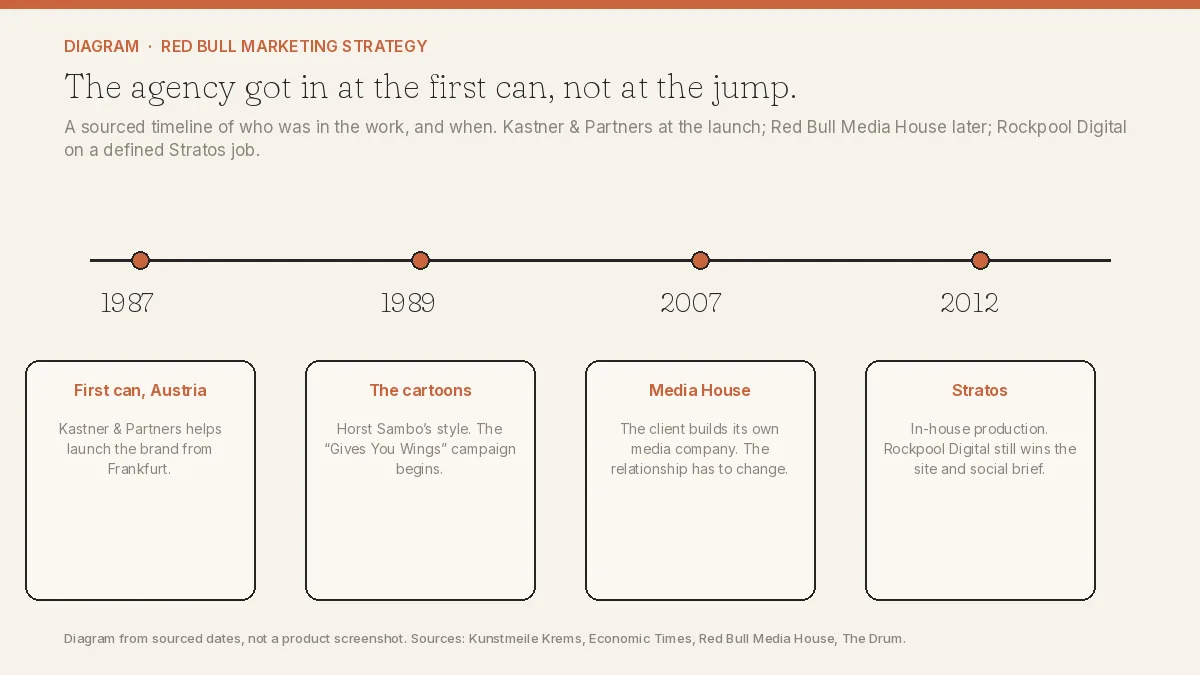
The cartoons arrived almost immediately. The exhibition says Red Bull's first animated commercials followed in 1989, developed by Kastner & Partners, with art director Horst Sambo creating the graphic style, and that by the 2017–2018 show the campaign was running in over 170 countries (Kunstmeile Krems).
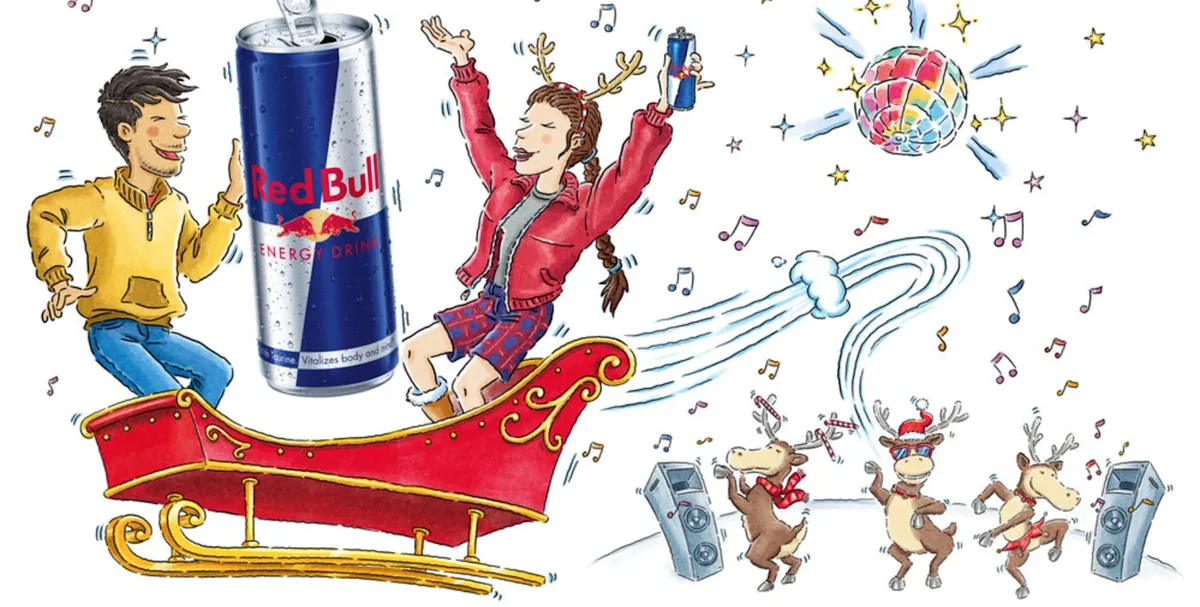
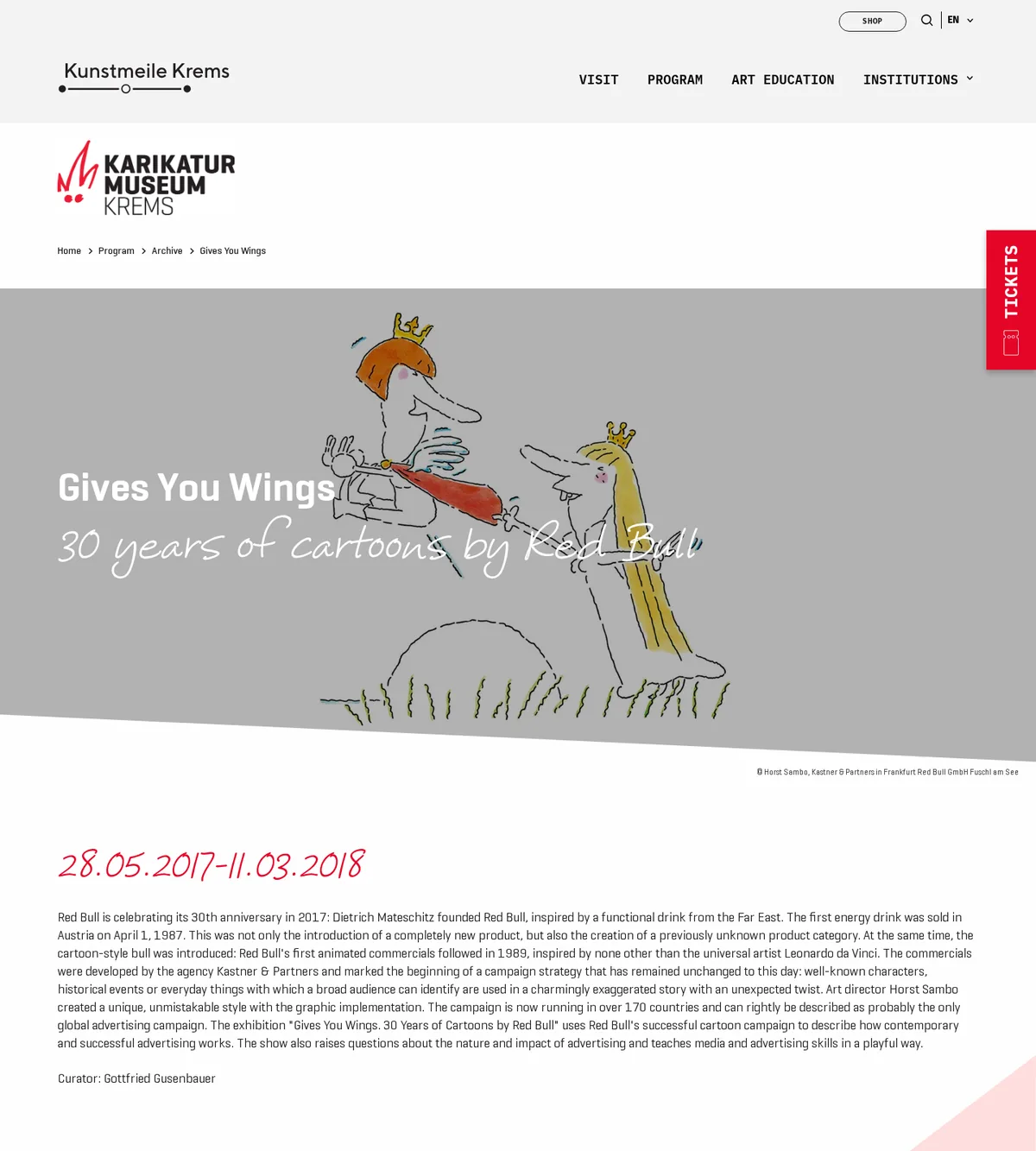
Kastner was not pitching a famous global brand. It was helping launch a drink nobody had a shelf for yet, and giving the people in that Irish Times list a line they could repeat: "Red Bull Gives You Wings."
A 2012 *Economic Times* feature calls Kastner & Partners Red Bull's "official international ad agency network," says the firm "helped launch the brand from their Frankfurt office in 1987," and is "the source of all the material," with local shops customizing the spots. In 2009, *The Sydney Morning Herald* reported a long global tie-up, and that Johannes Kastner, a copywriter and "close friend" of Dietrich Mateschitz, "developed Red Bull's tag line 'Gives You Wings.'" The same piece added that he "is said to still own the IP rights." That last clause is a report of what was said, not a document we have verified, so it stays qualified.
The slogan later became a badly reported legal story. In 2014, Red Bull agreed to a proposed U.S. settlement about functional marketing claims. TINA.org was clear: the suits were about scientific support for performance and similar claims, not about consumers disappointed they had not grown wings, and Red Bull intended to keep the trademarked slogan. Snopes reached the same conclusion. Newsweek, covering a later Canadian settlement in 2019, noted: "Despite reports to the contrary, the company has not stopped using 'Red Bull gives you wings' as its slogan." The line survived a news cycle that tried to kill it. The cartoons traveled because the brand already knew who they were for, and already had a way to put a can in those people's hands.
Where they already were
Red Bull did not wait for a mass-market shelf to teach people what the can was. It went to the places its prospects already spent time.
The Irish Times says one of the first techniques was to hire student brand managers at university campuses, "giving each one a case of Red Bull and encouraging them to throw a party," and to hire "hip locals" to drive logoed cars with a four-foot can and fridges of more than 250 cans for "those in need of energy." Linda Rosenberg, who was Director of Consumer Development for Red Bull North America, later described the U.S. version as a "sampling and consumer education program now known as the 'Wings Team,'" with teams sent to "targeted locations where people were likely to have an immediate need for energy, endurance or mental focus," and a collegiate program that she says grew to more than 250 student brand managers. Those headcounts and the "Wings Team" name are her account of the U.S. build-out, not an official Red Bull filing (Rosenberg).
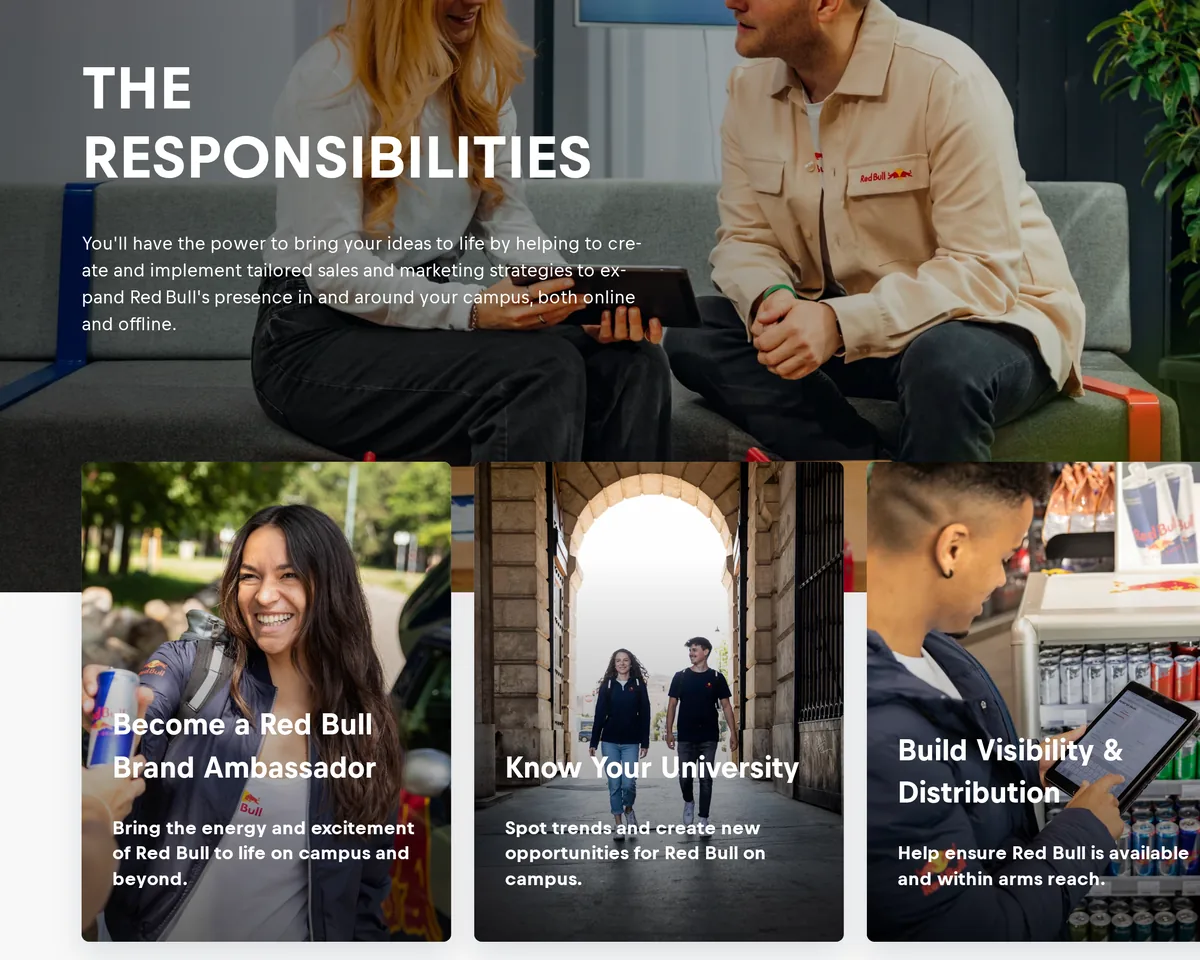
The official program is still built around places. Today's Student Marketeers are asked to "learn Red Bull's target group," build a campus plan, understand local "hot-spots," and sample "at the right place and right time" (Berkeley Student Marketeer listing). The official program page puts the same idea in three jobs: bring the brand to life "on campus and beyond," "Know Your University," and keep the can "within arms reach."
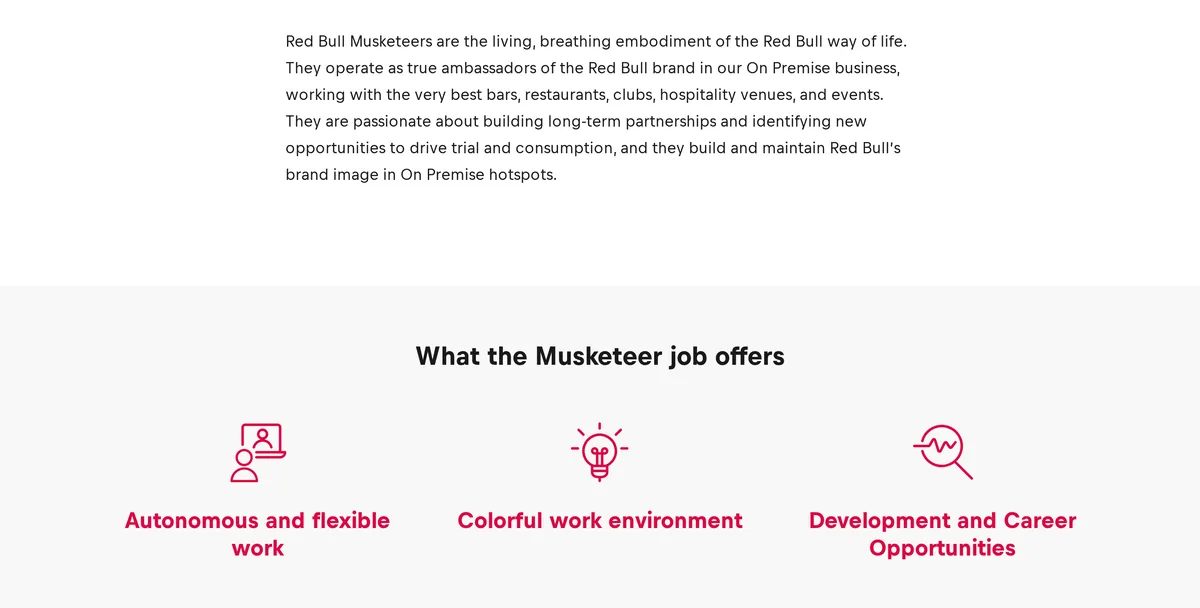
Nightlife and hospitality were a parallel map. Red Bull's official Musketeer program describes on-premise specialists who work with "the very best bars, restaurants, clubs, hospitality venues, and events," know their territory, watch trends, and "analyze data and roll out effective plans" (The Art of Musketeering). The Irish Times also noted that the company "keeps tight control on how it markets itself to clubs and bars."

The signal was when the need showed up
The Irish Times and Rosenberg both describe the same trigger: not "is this person in our demographic," but "is this person in need of energy right now." Official program copy is just as direct. Student Marketeers are hired to sample "at the right place and right time." A 2019 official write-up of the program in Lebanon is more specific: "build sampling mission plans for key consumption occasions (study, gaming, at-work, social, and fitness)," and keep relationships with campus clubs and key local people. Midterms, a training session, a night out, a late shift: those are the windows.
It also did not treat what the field learned as throwaway color. Official listings ask Student Marketeers to "plan & report your activities in the dedicated online platform" and to bring back "local insights, trends and overall opportunities." The 2019 Lebanon write-up names that platform "Red Bull University 3.0." Musketeers are asked to do the same on premise: own the territory, watch the trends, and use the data to plan. This is not a claim that Red Bull ran a modern B2B intent product. It is a simpler fact: the next visit was supposed to be better timed than the last one.
Then the client turned events and content into an audience
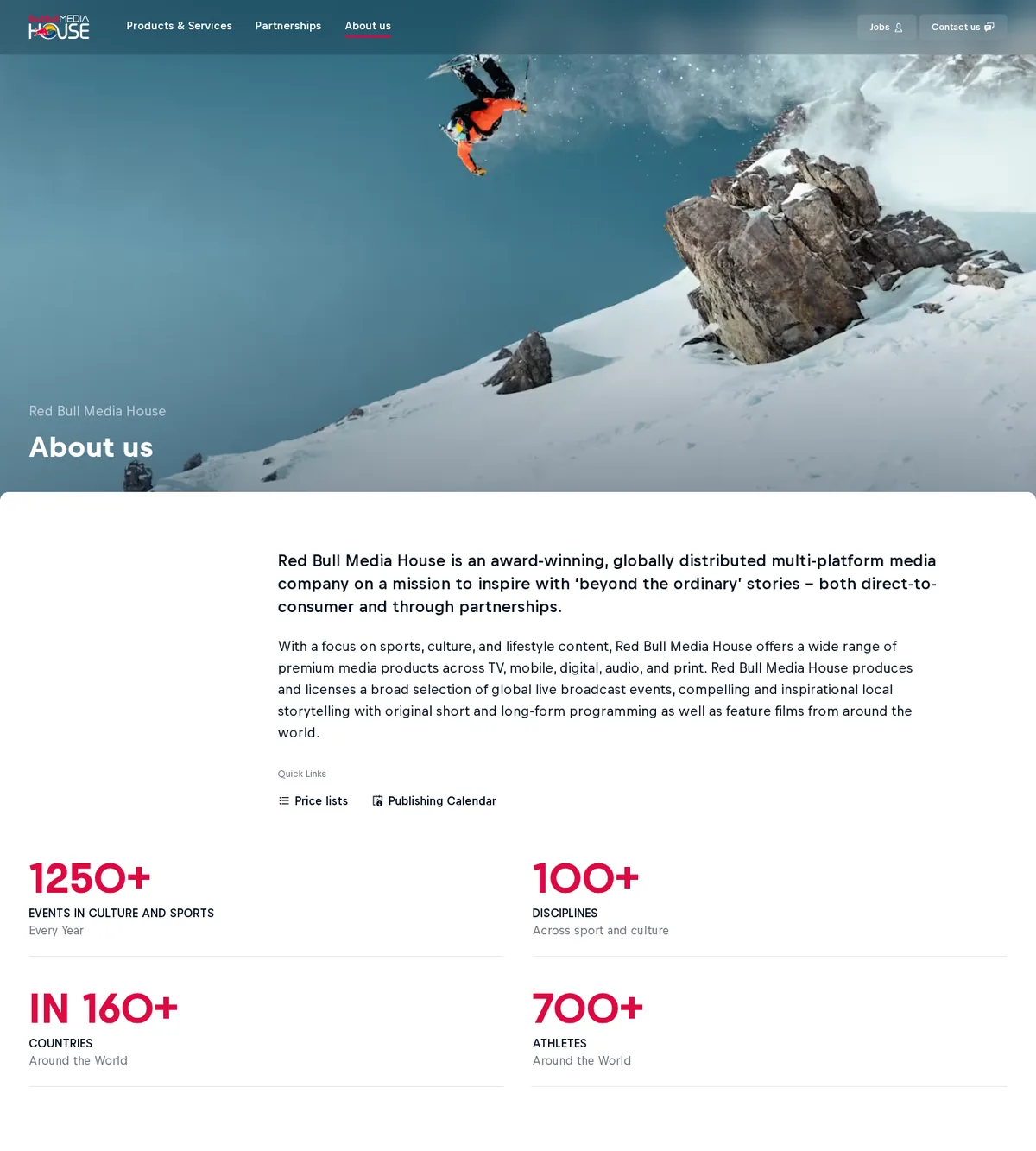
In 2007, Red Bull founded Red Bull Media House, "to produce and distribute unique content" (Red Bull Media House, About). The official history marks 2010 as Red Bull Racing's first Formula 1 title, 2012 as the Stratos jump, and 2018 as sales in over 170 countries. It now lists 1,250+ culture and sports events a year, in 160+ countries, with 700+ athletes.
The events are not only spectacle. They are places the brand already knows its people will be, and a machine for first-party attention: people who watch, subscribe, show up, and come back. A client you helped define can grow an in-house engine that looks like the whole strategy. The original agency does not have to disappear, but the relationship has to change. The Duolingo marketing strategy teardown is the same shape in a different category.
On 14 October 2012, Felix Baumgartner jumped from the edge of space. YouTube's blog, published the same day, said that at peak "you were watching more than 8 million concurrent livestreams," and called it "a livestream with the most concurrent views ever on YouTube." The altitude, freefall, and speed figures in that post are YouTube's day-of report, not a later sporting-authority ratification.
The jump was also a first-party audience event. Dachis Group, measuring the social campaign, said that in 15 days "2,000,000 new accounts subscribed for Red Bull updates across all brand presences." That is Dachis Group's measurement, not an official Red Bull disclosure, and the firm noted that it and Archrival had conducted work for Red Bull. The write-up was later republished by Sprinklr. The useful shape remains: a content event that already knew its audience also built a list the brand could talk to again.
The production was Red Bull's. The Media House timeline treats Stratos as a house event. It was not a story with no agencies in it. In February 2012, *The Drum* reported that Rockpool Digital had been hired to create the project's website, social media strategy, and interactive experiences, including a live broadcast with a data overlay on the site. Rockpool was not the lead agency of record. It was a specialist, ready for a defined job at the moment the stunt needed a place for the world to watch.
What agency owners should steal
Name the prospect more tightly than a vertical. "Energy drink buyers" would have been as useless as "CPG brands" is for an agency. Red Bull named people with a real need, and Kastner wrote a line those people could carry.
Go where they already gather. The brand showed up on campuses, in clubs and bars, and at events, places the prospect already had a reason to be. Your "campus" is the short list of accounts and rooms where your kind of buyer already spends time. Be useful there before the RFP is public.
Watch for the moment of need. Official sampling plans were built around occasions: study, training, work, a night out. A hiring spree, a funding round, a new marketing lead, a visit to your site: those are the midterms of a brand that might hire you. See buying signals.
Bring what you learn back into the system. Field teams were asked to report local insights, not just hand out cans. Keep a "not now" list so that when the same account comes back, you already know who they are. How marketing agencies get clients is the longer version of that habit.
When the client builds an in-house engine, redefine the work. Red Bull Media House is the client's own studio and events machine, not a vendor. Rockpool did not replace Kastner, and it did not replace Media House. It built the site and social layer for Stratos. A new internal studio is a "not now" for some scopes and an opening for others.
The timing lesson for agency owners
Agencies don't have a lead problem. They have a timing problem.
Red Bull looks, from a distance, like a brand that "does not advertise" and just does stunts. Up close, it knew its prospects first: who needed energy, where they already were, and when that need was live. An agency was in the room at the first can, an art director gave those prospects a style the world still recognizes, the client later built a serious in-house media engine, and a specialist shop still got a defined job on the day 8 million people watched a jump live. The creative followed the knowledge of the prospect. The knowledge of the prospect followed the timing.
If you want the same lesson in a Portland story, read our Nike marketing strategy teardown. For a founder who kept a killed idea until the timing changed, see Liquid Death. For the data version of knowing the prospect before you show up, see the Netflix marketing strategy teardown.
ProspectDesk is built for that kind of timing in your new-business pipeline, rather than in a drinks launch. We are not a contact-data provider, and we are not selling you a bigger list of marketing directors. Know Your Prospect is the job: seeing which companies in your world are actually in-market right now, starting with the people already on your site and the accounts already showing intent. See also website visitor identification software and Agency Teardowns.
If you want to see which of your prospects are in that window, book 30 minutes.
I've taken businesses from $0 to $2M three times, and I built DTC POD and Castmagic along the way. The Red Bull lesson is the one those runs keep teaching: the work goes to whoever already knew the prospect, and was already in motion, when the moment opened.
FAQ
What is Red Bull's marketing strategy?
It is often described as events and content first. The clearer through-line is prospect knowledge: the brand named the people with a real need for energy, showed up where they already gathered, and timed the work to those moments, while Kastner & Partners built the "Gives You Wings" cartoon campaign that began in 1989. Since 2007, Red Bull Media House has turned much of that world into the brand's own media company.
How did Red Bull know its prospects?
Consumer education teams and student brand managers, later formalized as Student Marketeers and, on premise, Musketeers, were sent to campuses, clubs, bars, and events, and told to sample at the right place and right time. Official listings still ask those teams to report local insights from the field.
Who is Red Bull's advertising agency?
Kastner & Partners has been widely described as Red Bull's international advertising network, and as the agency that helped launch the brand from Frankfurt in 1987 and developed the cartoon campaign. Red Bull also built Red Bull Media House in 2007, and has hired specialists such as Rockpool Digital for defined projects like the Stratos site.
Did Red Bull have to stop using "Gives You Wings"?
No. After a 2014 U.S. settlement about functional marketing claims, TINA.org and later Newsweek reported that the company continued to use the trademarked slogan. The settlement discussion was about scientific support for product claims, not about retiring the line.
How many people watched the Red Bull Stratos jump live?
YouTube's official blog, on the day of the jump, said that at peak there were more than 8 million concurrent livestreams, which it called the most concurrent views for a livestream on YouTube at the time.
Sources
- Kunstmeile Krems, "Gives You Wings": first can 1 April 1987; cartoons 1989; Kastner & Partners; Horst Sambo
- Economic Times, 1 Feb 2012: Kastner as official international network; Frankfurt 1987 launch
- Sydney Morning Herald, 13 Aug 2009: long tie-up; tag line credit; reported IP claim left unverified
- Irish Times, 11 Aug 2003: consumer education teams; student brand managers; "those in need of energy"
- Official Student Marketeer program: university focus since 1987; more than 4,000 Student Marketeers; "Know Your University"
- Student Marketeer listing, UC Berkeley: target group; "right place and right time"; reporting platform; local insights
- Red Bull Lebanon, 14 Nov 2019: sampling plans for study, gaming, work, social, and fitness; Red Bull University 3.0
- The Art of Musketeering: bars, restaurants, clubs, hospitality venues, and events; territory data used to plan
- Linda Rosenberg, Red Bull: her account of the U.S. Wings Team and collegiate program
- Red Bull Media House, About: founded 2007; current events and athlete figures
- YouTube Blog, 14 Oct 2012: 8 million+ concurrent livestreams
- The Drum, 8 Feb 2012: Rockpool Digital on Stratos
- Sprinklr republication of Dachis Group's Stratos measurement: 2 million new subscribers in 15 days, with a disclosure that Dachis and Archrival had worked for Red Bull
- TINA.org, 29 Oct 2014; Snopes, 8 Oct 2014; Newsweek, 22 Aug 2019